
From Senate Democrats:
CHICAGO – Taking both affordability and sustainability into account, members of the Illinois Senate Democratic Caucus led a landmark law that is projected to save Illinois households more than $13 billion in energy costs over the next two decades.
“As Illinois and the rest of the nation face spikes in energy prices, this new law brings much-needed relief for families and gives our state the resources to protect its residents from unprecedented federal cuts,” said State Senator Steve Stadelman (D-Rockford). “This law accomplishes our goal of saving Illinoisans hundreds of dollars on utility bills annually while transitioning the state to a more reliable energy grid.”
Senate Bill 25 aims to give Illinois new tools to reduce utility rate hikes, strengthen the state’s power grid, expand renewable energy sources and keep bills low for consumers. The law contains multiple provisions to tackle rising energy costs while transitioning Illinois to a cleaner, more reliable grid.
The law incentivizes measures that lower electricity prices by addressing the demand for energy and increasing grid capacity through things like energy storage. Battery storage lowers costs over time — meaning consumers will be on track to save more than $13 billion over the next 20 years with the added three gigawatts of energy storage provided by Senate Bill 25.
“This law gives Illinois the tools to keep costs under control and prepare our energy system for the future,” said State Senator Bill Cunningham, a Democrat who represents portions of Chicago and the Southwest Suburbs. “It’s about making smart investments today that pay off for consumers tomorrow.”
Senate Bill 25 was signed into law Thursday.
From State Senator Craig Wilcox:
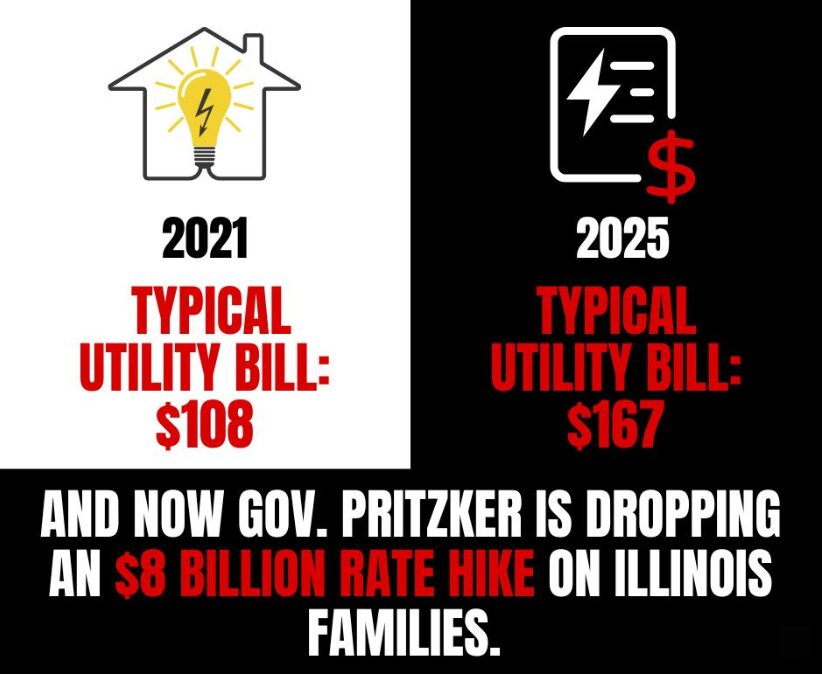
In a sweeping change to Illinois energy policy, Governor Pritzker has signed into law a new policy that eliminates long-standing limits on how much utility companies can raise electric rates.
The law opens the door to significant increases in future bills and directs large sums of money toward experimental energy programs that may offer little relief to consumers.
The law also weakens local control by allowing large battery storage facilities to be placed as close as 150 feet from homes and farms.
Many families and community leaders are concerned about safety, property values, and the lack of local input.
I voted against this measure when it came before the Senate during Veto Session.
At that time, several of my colleagues and I warned that the new mandates, higher costs, and reduced oversight will make energy less affordable and reliable.
Families already struggling with high utility bills may face even greater financial pressure as a result of this law.
